
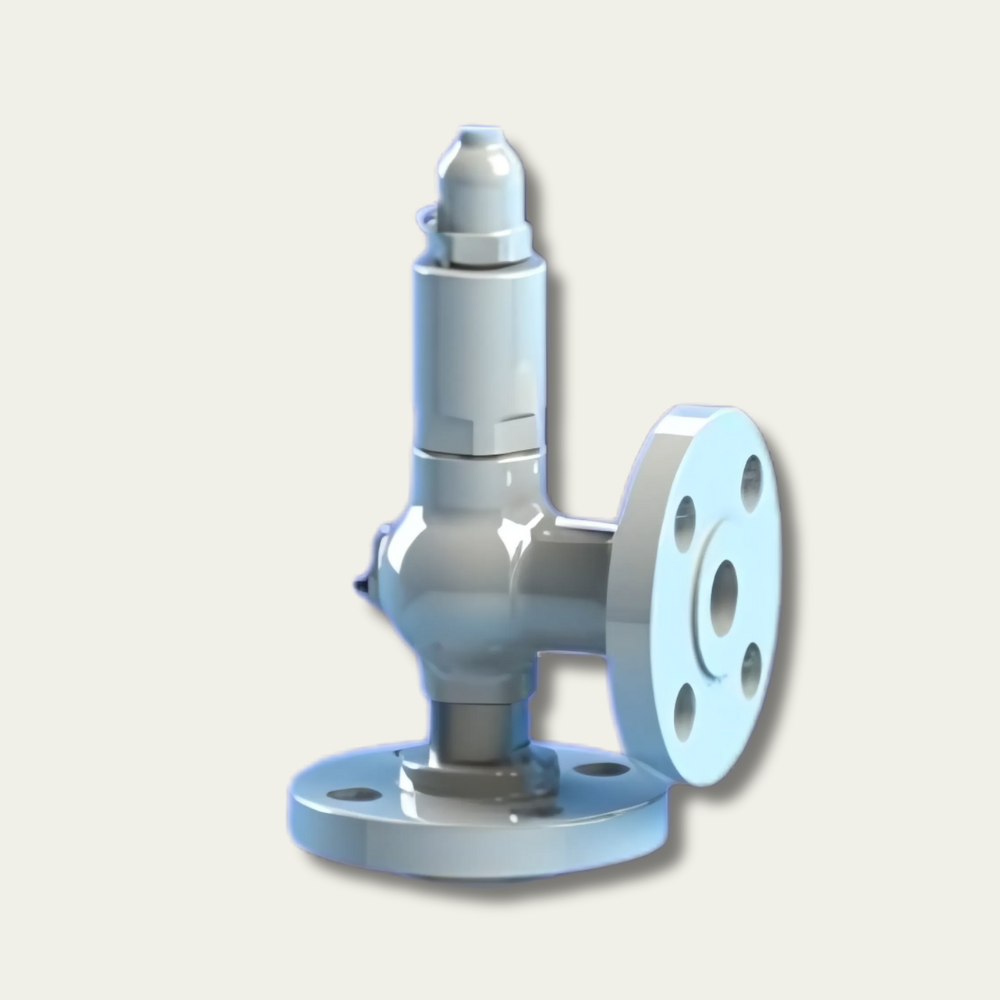
When comparing a pressure safety valve vs. pressure relief valve, it is important to understand that both devices are designed to protect pressurised systems from potentially dangerous pressure conditions. Still, their applications, operating characteristics, and terminology can differ. In industrial facilities, selecting the correct pressure protection device is essential for protecting equipment, maintaining process reliability, and supporting safe plant operation. Understanding the difference between a Pressure Safety Valve (PSV) and a Pressure Relief Valve (PRV) can help engineers and plant operators make better decisions for oil and gas, mining, petrochemical, power generation, water, and other demanding applications.
What Is a Pressure Safety Valve?
A Pressure Safety Valve, commonly known as a PSV, is a safety device that automatically releases excess pressure when system pressure reaches a predetermined set point.
PSVs are particularly associated with applications involving compressible fluids such as gases and steam. When system pressure rises beyond the defined limit, the valve opens rapidly to discharge the excess pressure. Once the pressure returns to a safe level, the valve closes according to its design characteristics.
The primary purpose of a PSV is not normal pressure control. Instead, it acts as a protective device during abnormal or emergency conditions.
For example, a steam system may experience excessive pressure because of a blocked outlet, equipment malfunction, fire exposure, or failure of a control system. A properly sized PSV can provide a final layer of protection by relieving pressure before the equipment exceeds its allowable design limits.
Flowlink Valves & Controls provides engineered pressure safety solutions for demanding industrial applications. Its product range includes pressure safety valves designed for different pressure, temperature, material, and service requirements. Flowlink’s documented valve range includes designs aligned with standards such as API 520, API 521, API 526, and API 527.
What Is a Pressure Relief Valve?
A Pressure Relief Valve, or PRV, is another type of pressure protection device used to prevent excessive pressure from damaging equipment and piping systems.
The term PRV can be used broadly across different industries, and its exact meaning can vary depending on the application and engineering convention. In many industrial contexts, a pressure relief valve is associated with liquid service and is designed to open when pressure exceeds a predetermined set pressure.
Unlike a conventional control valve, a PRV is primarily intended to protect the system from abnormal pressure conditions rather than continuously regulate process pressure.
For example, a liquid-filled pipeline can experience thermal expansion when a blocked-in liquid is exposed to rising temperatures. Even a relatively small amount of thermal expansion can create a significant increase in pressure. A properly selected relief valve can discharge the excess fluid and prevent the pressure from exceeding the allowable limit.
Flowlink offers a range of pressure regulating and relieving solutions, including pressure relieving and reducing valves, direct-acting pressure regulators, pilot-operated self-actuated pressure regulators, and slam shut-off valves.
PSV vs PRV: What Is the Main Difference?
The simplest way to understand PSV vs PRV is to consider the type of service, operating characteristics, and terminology used for the valve.
A PSV is generally associated with protection against excessive pressure in systems containing gases or vapours and is commonly designed for rapid opening when the set pressure is reached.
A PRV is often associated with liquid applications, where the valve opens progressively to relieve excessive pressure.
However, terminology is not always consistent across industries. Some manufacturers, engineers, standards, and regions may use PRV as a general term for pressure-relieving devices, while others distinguish between PSV and PRV based on fluid service and valve operating characteristics.
Therefore, engineers should not select a valve based only on whether it is labelled PSV or PRV. The actual application, fluid characteristics, pressure conditions, temperature, required capacity, applicable standards, and equipment design pressure must all be evaluated.
Key Differences Between Pressure Safety Valve and Pressure Relief Valve
1. Typical Fluid Service
One of the most common distinctions is the type of fluid being handled.
PSVs are frequently used for gases, vapours, and steam applications. PRVs are often associated with liquids.
However, this is not an absolute rule. The appropriate device depends on the engineering requirements of the specific application.
2. Opening Characteristics
A PSV used in gas or vapour service may be designed to open rapidly once the set pressure is reached. Rapid opening allows the valve to release pressure quickly during an abnormal event.
A relief valve used for liquid service may open progressively as pressure increases. This characteristic is useful when controlling pressure in liquid systems where sudden discharge could create undesirable process conditions.
3. Primary Purpose
Both devices provide pressure protection, but they should not be confused with ordinary pressure control valves.
A pressure control valve continuously adjusts flow to maintain a desired operating condition.
A safety or relief valve generally remains closed during normal operation and activates when pressure reaches its specified set point.
This distinction is critical because pressure protection devices should not normally be used as substitutes for continuous process control.
4. Application Environment
PSVs are widely used in applications such as steam systems, gas processing, pressure vessels, refineries, petrochemical plants, and other systems where compressible fluids may create dangerous overpressure conditions.
PRVs can be used in liquid systems such as pipelines, hydraulic systems, chemical processing equipment, and liquid storage or transfer applications.
The selection must always be based on the complete process design rather than simply the industry name.
Why Pressure Protection Is Essential in Industrial Systems
Pressure protection is one of the most important elements of industrial process safety.
Industrial systems can experience unexpected pressure increases for many reasons, including:
- Blocked discharge lines
- Closed isolation valves
- Control valve failure
- Pump malfunction
- Compressor failure
- Thermal expansion
- Fire exposure
- Chemical reactions
- Utility failures
- Incorrect operating conditions
- Equipment malfunction
Without adequate pressure protection, excessive pressure can damage vessels, pipelines, pumps, heat exchangers, compressors, and other critical equipment.
In severe cases, overpressure can result in equipment rupture, release of hazardous substances, fire, environmental damage, or serious injury.
This is why pressure safety devices need to be correctly specified, sized, installed, tested, and maintained.
Understanding API Safety Valves
API safety valves are particularly important in industries where recognised engineering standards and strict safety requirements are essential.
API standards provide engineering requirements and guidance relevant to pressure relieving devices and associated applications. Flowlink’s pressure safety valve range references standards including API 520, API 521, API 526, and API 527, along with other recognised design and material standards depending on the valve series.
API 520, for example, is associated with the sizing, selection, and installation of pressure-relieving devices, while API 521 addresses pressure-relieving and depressuring systems.
Using equipment designed according to applicable standards can help engineers develop more reliable pressure protection systems and support project compliance.
However, standards should not be treated as a replacement for engineering assessment. The valve still needs to be correctly selected for the specific fluid, pressure, temperature, capacity, installation, and operating conditions.
How to Select the Right Industrial Pressure Valve
Choosing an industrial pressure valve requires more than matching the valve size to the pipeline diameter.
Several technical factors need to be considered.
Set Pressure
The set pressure is one of the most important parameters. It must be established based on the protected equipment’s allowable pressure and the applicable design requirements.
Operating Pressure
Normal operating pressure must be considered alongside maximum anticipated pressure. A valve that is incorrectly selected for the operating conditions may experience unstable operation, leakage, or unnecessary opening.
Fluid Characteristics
Engineers should identify whether the medium is a liquid, gas, vapour, steam, corrosive chemical, hydrocarbon, or another process fluid.
Fluid properties can significantly influence valve design, material selection, capacity calculations, and discharge requirements.
Temperature
Temperature affects materials, seals, springs, pressure ratings, and overall valve performance. High temperature applications may require specialised materials and designs.
Flowlink’s pressure safety valve product range includes solutions for demanding temperature and pressure conditions. Its published specifications include designs for pressures extending into hundreds of barg and temperatures reaching several hundred degrees Celsius, depending on the series.
Required Capacity
A pressure safety device must be capable of relieving enough flow to prevent the protected equipment from exceeding its allowable pressure.
Relief capacity calculations should account for credible overpressure scenarios and applicable engineering standards.
Materials
Material compatibility is essential, especially when dealing with corrosive, toxic, abrasive, high-temperature, or high-pressure media.
Materials may include carbon steel, stainless steel, duplex alloys, and other specialised materials depending on the application.
Installation
Correct installation is just as important as correct valve selection. Engineers should consider inlet and outlet piping, discharge routing, back pressure, accessibility, drainage, support, and maintenance requirements.
Pressure Control vs Pressure Protection
A common mistake is treating pressure control and pressure protection as the same function.
Pressure control is generally part of normal process operation. A control valve or pressure regulator continuously adjusts the process to maintain a desired pressure.
Pressure protection, on the other hand, is intended to protect equipment when an abnormal pressure condition occurs.
For example, a pressure regulator may maintain a downstream pressure during normal operation, while a safety valve provides protection if pressure rises beyond the permitted limit.
Flowlink provides both pressure regulating and pressure safety solutions, allowing engineers to select equipment according to the specific function required. Its pressure regulating range includes pressure relieving and reducing valves, direct-acting regulators, pilot-operated regulators, and slam shut-off valves.
For applications where accurate pressure management is required, Flowlink also provides engineering support for valve sizing, audits, and selection.
Pressure Safety Valves in Oil and Gas Applications
Oil and gas facilities frequently operate with high pressures, hazardous fluids, elevated temperatures, and complex process conditions.
Pressure safety valves can be used across areas such as:
- Gas processing
- Refineries
- LNG facilities
- Storage systems
- Pressure vessels
- Pipeline systems
- Steam systems
- Petrochemical processing
- Wellhead and production equipment
In these environments, reliable pressure protection is essential because uncontrolled pressure can create significant operational and safety risks.
Flowlink supports oil and gas operations with flow control equipment and engineered solutions. The company works across oil and gas, mining, petrochemical, power generation, water, food and beverage, and infrastructure sectors throughout Australia, New Zealand, PNG, and Pacific regions.
Why Engineering Support Matters
Selecting a PSV or PRV should not be based solely on a catalogue description.
Every application has different operating conditions. Two systems using the same nominal pipe size may require completely different pressure protection solutions because of differences in fluid, temperature, pressure, flow rate, discharge conditions, or equipment design.
This is where engineering support becomes valuable.
Flowlink provides valve engineering services including audits, sizing, and selection of control, safety relief, and actuated valves. These services can be delivered in-house or on-site depending on project requirements.
Working with experienced valve specialists can help identify the appropriate valve type, materials, pressure rating, sizing requirements, and applicable standards.
PSV vs PRV: Which One Should You Choose?
There is no universal answer to whether a PSV or PRV is better.
The correct choice depends on the application.
For gas, vapour, and steam systems where rapid pressure relief may be required, a pressure safety valve may be the appropriate solution.
For liquid systems requiring pressure relief, a pressure relief valve may be more suitable.
However, these distinctions are general rather than universal. Engineering standards and terminology can vary, so the final selection should always be based on application-specific calculations and requirements.
The most important objective is to ensure that the selected valve provides reliable protection under credible overpressure scenarios while remaining stable and dependable during normal plant operation.
How Flowlink Valves & Controls Can Help
Flowlink Valves & Controls provides engineered flow control solutions for demanding industrial environments. Its product portfolio includes Pressure Safety Valves, Pressure Regulating Valves, and Control Valves, supporting applications across oil and gas, mining, petrochemical, power generation, water, food and beverage, and infrastructure sectors.
The company also provides Engineering Solutions covering valve audits, sizing, selection, and engineered flow control requirements.
If you need help selecting the right pressure protection solution for your plant, speak with the Flowlink Valves & Controls team. Their technical experience and global supply network can help you identify a suitable solution based on your pressure, temperature, fluid, material, capacity, and application requirements.
Contact Flowlink Valves & Controls today for expert assistance with pressure safety valves, pressure relief valves, valve sizing, and industrial flow control solutions.
Frequently Asked Questions
1. What is the difference between a pressure safety valve and a pressure relief valve?
A pressure safety valve is generally associated with gas, vapour, and steam applications and may open rapidly when the set pressure is reached. A pressure relief valve is commonly associated with liquid service and may open progressively as pressure increases. However, terminology varies between industries, so selection should be based on the actual application and applicable standards.
2. Is a PSV the same as a PRV?
Not necessarily. PSV and PRV are sometimes used interchangeably as general terms for pressure-relieving devices, but in many engineering applications they describe different operating characteristics or fluid services. Engineers should review the applicable standards, process conditions, and manufacturer specifications before making a selection.
3. Why are API safety valves important?
API safety valves are important because recognised API standards provide requirements and guidance for pressure-relieving equipment, including areas such as sizing, selection, installation, and performance. Flowlink’s pressure safety valve range references standards including API 520, API 521, API 526, and API 527.
4. Can a pressure control valve replace a safety valve?
Generally, no. A pressure control valve is designed to manage pressure during normal operation, while a safety or relief valve is designed to provide protection during abnormal overpressure conditions. A properly engineered system may require both pressure control and independent pressure protection.
5. How do I choose the correct industrial pressure valve?
Start by evaluating the fluid type, normal and maximum operating pressure, set pressure, temperature, required relieving capacity, material compatibility, installation conditions, back pressure, applicable standards, and maintenance requirements. Professional valve sizing and engineering support can help ensure that the selected device is suitable for the specific application.