Modern industrial plants depend on precise flow management to maintain productivity, safety, product quality, and consistent operations. Whether a facility handles oil and gas, mining, petrochemical processing, power generation, water treatment, or manufacturing, controlling the movement of liquids, gases, steam, and other process media is essential. This is where industrial control valves play a critical role.
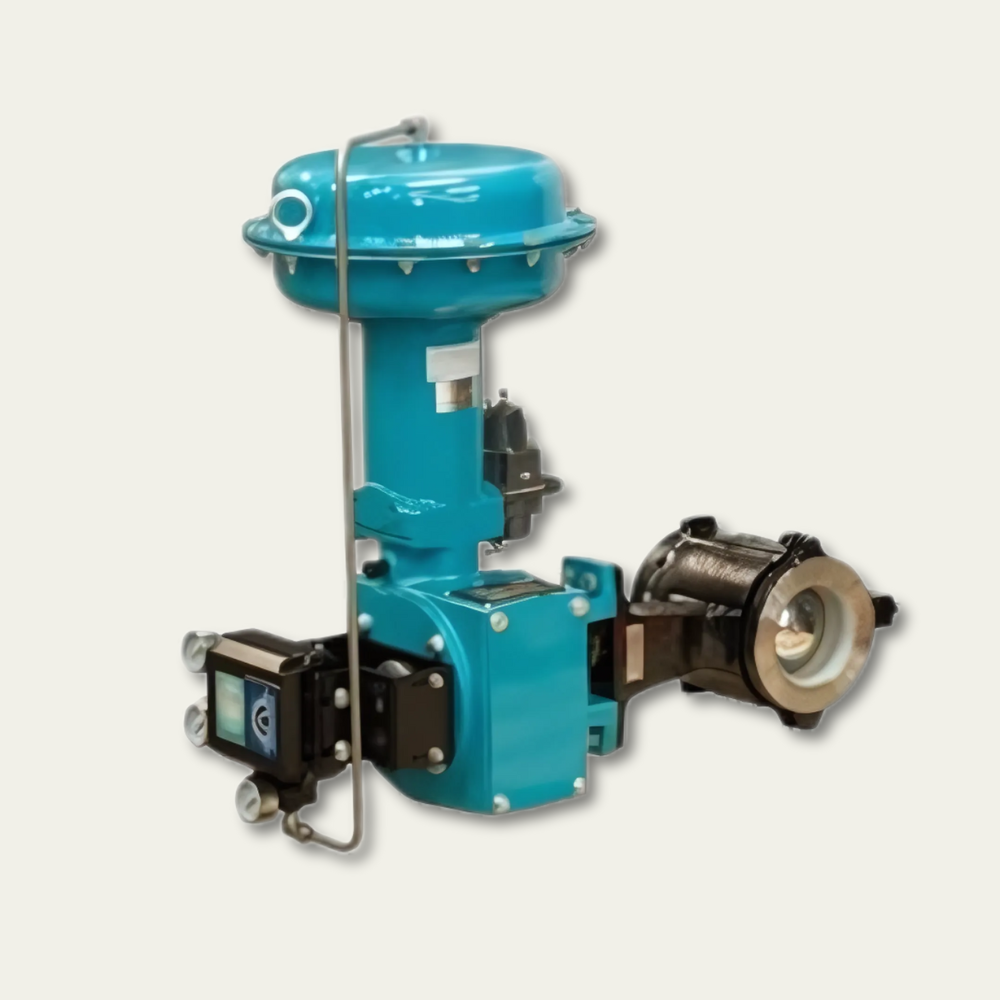
Unlike conventional isolation valves that are primarily used to start or stop flow, control valves are designed to regulate flow continuously according to changing process conditions. When integrated with actuators, sensors, controllers, and instrumentation, they can automatically adjust flow, pressure, temperature, and liquid levels.
For industrial facilities, the right control valve solution can contribute to better process stability, reduced energy consumption, improved equipment protection, lower maintenance requirements, and increased overall productivity.
What Are Industrial Control Valves?
Industrial control valves are devices used to regulate the flow of process media through industrial piping systems. The valve can be positioned partially open, fully open, or closer to the closed position depending on the requirements of the process.
A control valve system typically includes:
- Valve body
- Valve trim
- Actuator
- Positioner
- Controller
- Sensors and instrumentation
The controller receives information from field instruments and compares actual process conditions with the desired set point. It then sends a signal to the valve actuator, which adjusts the valve position to achieve the required process condition.
Flowlink Valves & Controls offers different types of control valve solutions, including globe, rotary, speciality, and segmented ball control valves. These products are designed for different industrial flow control requirements.
How Industrial Control Valves Improve Process Efficiency
1. Provide Accurate Flow Control
One of the primary benefits of control valves is accurate flow regulation.
Many industrial processes require a specific amount of fluid or gas to pass through a system at a particular time. Excessive flow can increase pressure losses, energy consumption, erosion, and equipment stress. Insufficient flow, on the other hand, can reduce production efficiency and affect product quality.
Control valves allow operators and automated control systems to adjust flow according to actual process requirements. This makes them an essential component of modern process control systems.
For example, a chemical processing plant may need to maintain a precise flow rate of raw materials. A control valve can continuously adjust the flow to maintain the required process conditions.
2. Improve Pressure Management
Pressure control is another important function of industrial control valves.
Industrial equipment such as pumps, pipelines, heat exchangers, compressors, and processing vessels often operates within specific pressure limits. Pressure fluctuations can reduce efficiency and potentially damage equipment.
Control valves can regulate the flow of process media to help maintain stable pressure conditions. When connected to pressure sensors and automated control systems, they can respond to changing conditions without requiring constant manual adjustment.
This is particularly valuable in industries where pressure changes can significantly affect production performance or equipment safety.
3. Support Temperature Regulation
Many industrial processes require accurate temperature control.
Steam, cooling water, heating fluids, and other media are frequently used to maintain process temperatures. A control valve can regulate the amount of heating or cooling medium entering a system.
For example, in a heat exchanger, a control valve can regulate steam flow according to the required temperature. If the process temperature increases above the desired set point, the control system can reduce steam flow. If the temperature decreases, the valve can open further.
This automatic adjustment helps maintain stable operating conditions and improves process consistency.
The Role of Automated Valves in Industrial Automation
Automation is increasingly important in modern industrial facilities. Automated valves allow plants to respond quickly to changing process conditions while reducing dependence on manual operation.
An automated valve typically combines a valve with an actuator and other control components. Depending on the application, the actuator may be pneumatic, electric, or hydraulic.
Flowlink provides valve and actuation solutions for demanding industrial environments. Its product range includes pneumatic and electric actuator technologies along with other actuation and instrumentation products.
For plants looking to improve automation, selecting the right actuation and instrumentation solutions is important because the actuator determines how effectively and reliably a valve responds to control signals.
Automation can provide several advantages:
- Faster response to process changes
- Reduced manual intervention
- Improved process consistency
- Better operator control
- Increased operational safety
- More efficient resource utilisation
How Actuator Valves Improve Process Performance
An actuator is responsible for moving the valve according to the control signal it receives. The right actuator must provide sufficient force or torque while meeting the operating requirements of the application.
Pneumatic Actuators
Pneumatic actuators use compressed air to operate valves. They are widely used in industrial environments where fast response and reliable operation are required.
They are commonly used with quarter-turn valves such as ball and butterfly valves and can also support modulating applications.
Electric Actuators
Electric actuators use an electric motor to operate the valve. They can provide accurate valve positioning and are useful where electrical power is readily available.
Electric actuators can be suitable for applications where precise control and remote operation are required.
Hydraulic Actuators
Hydraulic actuators can provide high operating force and torque. They may be selected for demanding applications involving large valves or high operating loads.
Choosing the appropriate actuator is essential because actuator performance directly affects valve response, reliability, and control accuracy.
Important Control Valve Applications
Control valves are used across many industries because different processes require accurate flow and pressure regulation.
Oil and Gas Industry
The oil and gas sector involves demanding operating conditions, including high pressures, extreme temperatures, corrosive media, and hazardous environments.
Control valves are used in upstream, midstream, and downstream operations for applications involving pipelines, processing systems, gas treatment, refining, and petrochemical facilities.
Flowlink provides flow control solutions for the oil and gas sector, supporting applications including wellhead control, pipeline management, emergency shutdown systems, refining, and gas processing.
Mining Industry
Mining processes frequently involve abrasive slurries, water, chemicals, compressed air, and other challenging media.
Control valves can regulate flow throughout grinding, milling, filtration, thickening, conveyance, storage, and water treatment systems.
Flowlink’s mining industry valve solutions are designed for demanding mining environments where reliability, efficiency, and resistance to harsh operating conditions are important.
Power Generation
Power plants depend on reliable control of steam, water, fuel, and gases.
Control valves can help regulate these media through boilers, turbines, heat exchangers, cooling systems, and other plant equipment. Accurate regulation helps maintain stable operating conditions while supporting efficient power generation.
Water and Wastewater Treatment
Water treatment plants require precise control throughout filtration, disinfection, pumping, distribution, and wastewater treatment processes.
Automated valve systems can help operators manage flow remotely while responding to changes in pressure, demand, and treatment requirements.
Flowlink provides water treatment flow control solutions for filtration, disinfection, backwash systems, wastewater treatment plants, sewage systems, and other water infrastructure applications.
Petrochemical Processing
Petrochemical facilities often operate under high temperatures, high pressures, and corrosive conditions. Control valves are used for accurate throttling and regulation of liquids, gases, and steam.
Flowlink’s petrochemical solutions include control valves designed for demanding process applications, with options for severe-service conditions and specialised flow requirements.
How Control Valves Reduce Energy Consumption
Energy efficiency is an important consideration for industrial plants because pumps, compressors, heating systems, and other equipment can consume significant amounts of energy.
Poor flow management can result in unnecessary pumping, pressure losses, excessive heating, or inefficient equipment operation.
Control valves help regulate flow according to actual process demand. Instead of allowing maximum flow continuously, the system can adjust valve position as requirements change.
This can help reduce unnecessary energy consumption and improve overall system efficiency.
However, energy savings depend on proper valve selection, sizing, installation, and control strategy. A valve that is incorrectly sized may create unnecessary pressure losses or operate outside its ideal control range.
The Importance of Process Control
Effective process control allows an industrial plant to maintain critical operating parameters within predefined limits.
Common parameters include:
- Flow
- Pressure
- Temperature
- Liquid level
- Differential pressure
- Process composition
Control valves form an important part of the feedback loop used to maintain these conditions.
A typical process control system may operate as follows:
Sensor → Controller → Positioner → Actuator → Control Valve → Process
The sensor measures the process condition. The controller compares the measurement with the desired set point and sends an appropriate signal. The positioner and actuator then move the valve to the required position.
This continuous feedback allows the system to respond automatically to process changes.
Why Correct Valve Sizing Matters
Correct valve sizing is essential for achieving reliable control performance.
An oversized valve may operate close to its closed position for much of its operating cycle. This can make precise regulation more difficult.
An undersized valve, on the other hand, may not provide enough flow capacity during peak operating conditions.
Engineers typically consider several factors when sizing a control valve, including:
- Required flow rate
- Inlet pressure
- Outlet pressure
- Pressure drop
- Fluid density
- Fluid viscosity
- Operating temperature
- Valve flow characteristics
- Cavitation potential
- Required control range
Professional sizing helps ensure that the valve operates effectively across the expected process conditions.
Flowlink provides engineering solutions for valve sizing and selection, including valve engineering, audits, sizing, and selection for industrial applications.
How Control Valves Help Reduce Downtime
Unplanned downtime can have a significant financial impact on industrial facilities.
Valve failures may cause production interruptions, process instability, equipment damage, or safety concerns. Regular inspection and maintenance can help identify potential problems before they result in major failures.
Important maintenance activities include:
- Valve inspection
- Actuator testing
- Positioner calibration
- Leakage checks
- Seal inspection
- Functional testing
- Control system verification
- Performance monitoring
Using reliable equipment and maintaining it correctly can help extend valve service life and reduce unexpected operational interruptions.
For facilities that need replacement valves, specialised equipment, or urgent flow control components, Flowlink also provides sourcing support for industrial valves through its global supplier and partner network. Its sourcing service includes support for valve audits, sizing, selection, and various control and actuated valve requirements.
Selecting the Right Industrial Control Valve
Choosing a control valve requires more than simply selecting the correct pipe size.
Engineers should evaluate the complete operating environment before selecting a valve.
Process Media
The properties of the process fluid or gas affect valve body materials, trim, seals, and other components.
Pressure and Temperature
The valve must be capable of safely handling the maximum and minimum pressure and temperature conditions expected during operation.
Flow Requirements
The required flow rate and pressure drop should be considered during valve selection and sizing.
Valve Type
Different valve designs provide different flow characteristics. Globe, rotary, speciality, and segmented ball control valves may be selected depending on the application.
Actuator Requirements
The actuator must provide adequate torque or force to operate the valve under actual process conditions.
Automation Requirements
If the valve is part of an automated system, its actuator, positioner, and control components must be compatible with the plant’s control architecture.
Benefits of Modern Flow Control Systems
Modern industrial facilities increasingly use integrated flow control systems rather than relying entirely on manually operated valves.
An integrated system can combine valves, actuators, sensors, controllers, positioners, and instrumentation.
The major benefits can include:
- Improved process stability
- Faster response to changing conditions
- Reduced manual intervention
- Better flow regulation
- Improved equipment protection
- Increased operational safety
- Lower energy consumption
- Reduced process variability
- Improved productivity
The effectiveness of the system depends on selecting components that work together correctly.
Why Choose an Experienced Valve and Controls Provider?
Industrial valve requirements can become complex when a plant operates under high pressure, high temperature, corrosive, abrasive, or hazardous conditions.
An experienced valve and controls provider can evaluate the application and recommend suitable products based on actual operating conditions.
Flowlink Valves & Controls provides engineered flow control solutions across industries including oil and gas, mining, petrochemical, power generation, water, food and beverage, and infrastructure. The company offers engineering support, valve solutions, actuation, instrumentation, and other engineered products for plant and flow control applications.
Its engineering team can also support valve audits, sizing, and selection, helping customers identify suitable solutions for specific process requirements.
Conclusion
Industrial control valves are essential components of modern process industries. They provide accurate regulation of flow, pressure, temperature, and other important process variables while supporting automation and operational efficiency.
When combined with suitable actuators, instrumentation, sensors, and controllers, control valves can respond automatically to changing process conditions. This helps reduce manual intervention, improve process consistency, protect equipment, and support safer plant operation.
However, achieving the best results requires more than choosing a high-quality valve. Proper sizing, material selection, actuator selection, installation, commissioning, and maintenance all have an important role in long-term performance.
For industrial plants looking to improve their flow management and process efficiency, working with an experienced valve and controls provider can make the selection and implementation process more effective.
Flowlink Valves & Controls provides engineered valve, actuation, instrumentation, sourcing, and flow control solutions for demanding industrial applications across Australia and other regions.
Frequently Asked Questions
1. What are industrial control valves used for?
Industrial control valves are used to regulate the flow, pressure, temperature, and level of process media in industrial systems. They can continuously adjust flow according to signals received from a control system.
2. How do control valves improve process efficiency?
Control valves improve efficiency by maintaining stable process conditions, regulating flow accurately, reducing unnecessary energy use, protecting equipment, and minimising manual intervention.
3. What types of actuators are used with control valves?
Common actuator types include pneumatic, electric, and hydraulic actuators. The correct type depends on factors such as required torque or force, response time, available utilities, environmental conditions, and automation requirements.
4. Why is control valve sizing important?
Correct valve sizing ensures that the valve can provide the required flow capacity while operating effectively within its intended control range. Incorrect sizing can lead to poor control, unnecessary pressure losses, increased wear, and inefficient operation.
5. Where are industrial control valves commonly used?
Industrial control valves are widely used in oil and gas, mining, petrochemical, power generation, water and wastewater treatment, food and beverage, manufacturing, and other process industries where accurate flow and pressure regulation is required.