Selecting the right valve for an industrial application can feel overwhelming. With so many types, materials, and performance ratings available, making the right choice is essential for efficiency, safety, and long-term reliability. At Flowlink Valves & Controls, we know how important it is to match the right valve to your unique operating environment. This guide will walk you through the fundamentals of valve selection, helping you make an informed decision that fits your needs.
Why Choosing the Right Valve Matters
Valves are the backbone of industrial flow control. They regulate, isolate, and direct fluids or gases in critical systems. Choosing the wrong valve can result in:
- Premature wear and costly maintenance.
- Inefficient operation and energy losses.
- Safety risks due to pressure mismatches or leaks.
- Corrosion and contamination in sensitive environments.
- Increased downtime and replacement costs.
When the correct valve is selected, industries benefit from:
- Smooth and reliable operations.
- Reduced maintenance cycles.
- Safer working conditions.
- Longer equipment lifespan.
- Optimised energy consumption.
Understanding the Main Types of Industrial Valves
Different valves are designed for specific functions. Here are the most common types you’ll encounter:
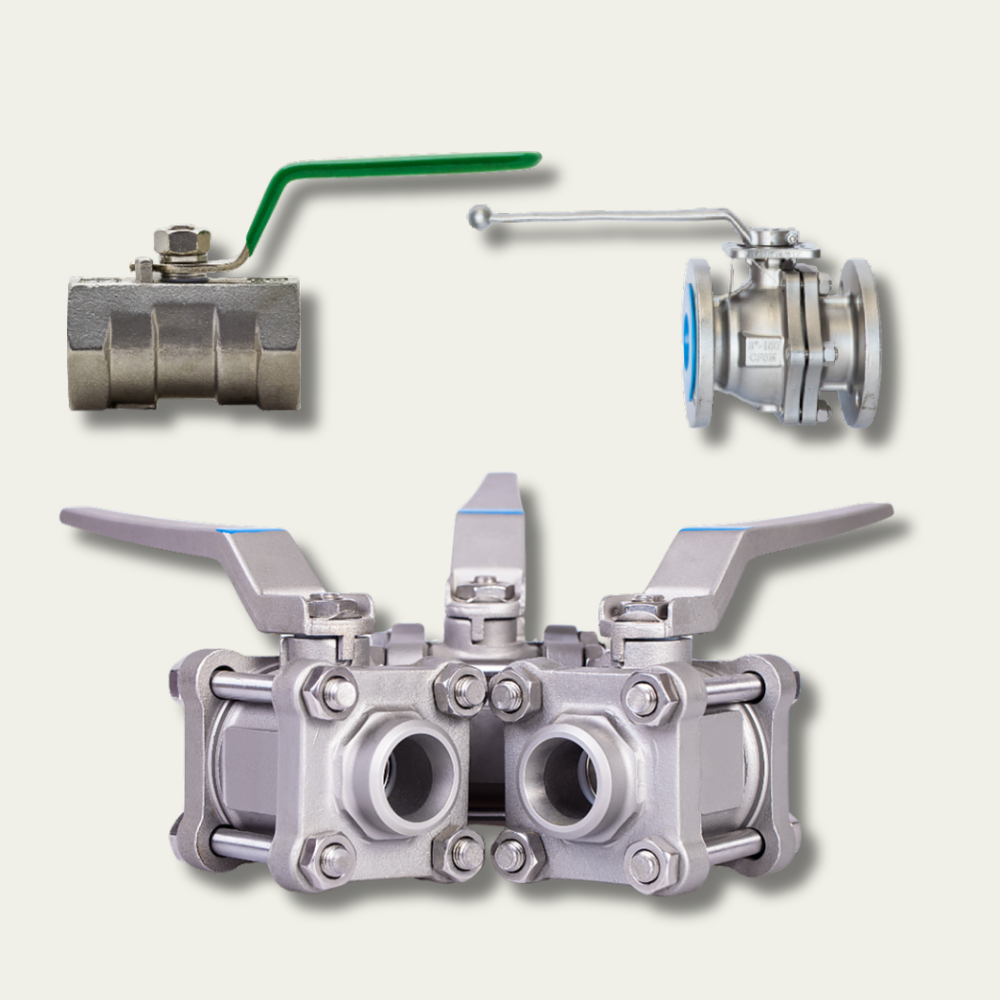
Ball Valves
- Function: Quick shut-off, low-pressure drop.
- Advantages: Simple operation, durable, minimal leakage.
- Limitations: Not ideal for throttling applications.
- Best Applications: Oil & gas, chemical plants, water treatment.
- Learn more: Explore Ball Valves.
Gate Valves
- Function: On/off control, less suited for throttling.
- Advantages: Full bore flow, low resistance.
- Limitations: Slow operation, prone to wear in high-cycle use.
- Best Applications: Pipelines requiring minimal flow resistance.
Globe Valves
- Function: Throttling and flow regulation.
- Advantages: Precise flow control, good sealing.
- Limitations: Higher pressure drop compared to ball or gate valves.
- Best Applications: Steam systems, cooling water, chemical feeds.
Butterfly Valves
- Function: Quick shut-off and moderate throttling.
- Advantages: Lightweight, cost-effective, space-saving.
- Limitations: Not suitable for very high pressures.
- Best Applications: HVAC, water distribution, fire protection systems.
Check Valves
- Function: Prevents backflow.
- Advantages: Automatic operation, protects pumps and equipment.
- Limitations: Can cause water hammer if not selected properly.
- Best Applications: Pump discharge lines, chemical systems.
Key Factors in Valve Selection
When choosing a valve for your industrial application, consider the following critical factors:
1. Application Environment
- Temperature: High-temperature fluids require valves made from alloys like stainless steel or special heat-resistant materials.
- Corrosive media: Aggressive chemicals need corrosion-resistant materials such as stainless steel or lined valves.
- Cleanliness: Food, beverage, and pharmaceutical industries require sanitary valves with smooth surfaces for easy cleaning.
2. Valve Materials
- Carbon Steel: Strong and economical, but less corrosion resistant.
- Stainless Steel: Excellent corrosion resistance, ideal for harsh environments.
- Bronze/Brass: Good for water applications, but limited in high-pressure use.
- Plastic (PVC/CPVC): Lightweight, corrosion-resistant, but not suitable for extreme temperatures.
3. Pressure Ratings
Always check that the valve can handle the maximum system pressure. Industrial valves are rated in PSI (pounds per square inch) or bar. Choosing the wrong rating may lead to dangerous system failures.
4. Flow Coefficient (Cv)
The flow coefficient determines how much fluid passes through the valve at a given pressure drop. A higher Cv means greater capacity. Engineers use Cv to size valves correctly for efficiency.
5. Maintenance and Serviceability
Valves with replaceable seats and seals are easier to maintain. Consider whether spare parts are readily available to reduce downtime.
Comparing Valve Types: Pros and Cons
Here’s a quick comparison to help guide your decision:
Valve Type | Best For | Pros | Cons |
Ball | On/off control, fast shut-off | Durable, low leakage, simple | Poor throttling |
Gate | Isolation in low-cycle systems | Low resistance, full bore | Slow, wear in repeated use |
Globe | Throttling and flow regulation | Precise control, tight shut-off | Higher pressure drop |
Butterfly | Large diameter flow applications | Compact, cost-effective | Limited high-pressure use |
Check | Preventing backflow | Automatic operation, pump safety | Potential water hammer issues |
Decision-Making Framework for Valve Selection
When faced with multiple options, a structured decision matrix can simplify selection.
Example Valve Selection Matrix
Criteria | Weight (%) | Ball Valve | Gate Valve | Globe Valve | Butterfly Valve | Check Valve |
Pressure Capability | 25 | 4 | 5 | 4 | 3 | 3 |
Flow Control Accuracy | 20 | 2 | 2 | 5 | 3 | 1 |
Maintenance Ease | 15 | 5 | 3 | 3 | 4 | 3 |
Cost Efficiency | 20 | 4 | 3 | 3 | 5 | 4 |
Space Requirements | 10 | 3 | 2 | 3 | 5 | 4 |
Durability | 10 | 5 | 4 | 4 | 3 | 4 |
Score (out of 5, weighted):
- Ball Valve: 4.1
- Gate Valve: 3.4
- Globe Valve: 4.0
- Butterfly Valve: 4.2
- Check Valve: 3.3
In this example, the butterfly valve scores highest due to cost and space savings, but the ball valve provides a strong balance of performance and durability.
Ball Valves in Industrial Applications
Ball valves deserve special mention because of their versatility. They are widely used in chemical, oil & gas, and water treatment industries due to their ability to provide a secure shut-off with minimal pressure drop. At Flowlink Valves & Controls, we provide a wide selection of industrial valve solutions designed for durability and reliability in challenging environments.
Industry Use Cases
To make this more practical, here are real-world examples of valve selection:
- Oil & Gas Pipelines: Gate valves are often chosen because they provide full bore flow and minimal resistance, reducing pumping costs.
- Pharmaceutical Production: Stainless steel sanitary ball valves are preferred for easy cleaning and contamination prevention.
- Water Distribution: Butterfly valves are cost-effective and lightweight, making them ideal for large-scale water systems.
- Chemical Processing: Globe valves are commonly used to control precise flow rates of corrosive fluids.
- Power Plants: High-pressure globe and gate valves are critical in steam systems
Conclusion
Choosing the right valve for your industrial application is about balancing performance, durability, and cost-effectiveness. By considering the application environment, valve materials, pressure ratings, and flow requirements, you can make a confident decision. At Flowlink Valves & Controls, we’re here to help you find the best solution for your specific needs. Whether you require ball, gate, globe, butterfly, or check valves, our expertise ensures you get the right fit for long-term efficiency and safety.
Ultimately, the correct valve selection safeguards your system’s reliability, reduces costly downtime, and provides peace of mind knowing your processes will run smoothly. Investing time in choosing wisely today can save significant resources tomorrow, and with Flowlink Valves & Controls as your trusted partner, you’ll always have guidance you can count on.
Need expert advice on valve selection? Our team is ready to assist with tailored recommendations for your project. Contact us today and let’s find the right valve solution together.
FAQs
Ball valves are widely used because of their reliability, quick shut-off, and low pressure drop.
If you need precise flow control, a globe valve is better. If you need isolation with low resistance, a gate valve works best.
Stainless steel or special alloys are recommended for corrosive environments.
Can a butterfly valve handle high-pressure applications?
What factors should I consider first when choosing a valve?