The oil and gas industry operates under demanding conditions where high pressure, extreme temperatures, corrosive fluids, flammable materials, and continuous flow are common. In such environments, reliable industrial valves for oil and gas are essential for controlling, isolating, regulating, and directing the movement of liquids and gases throughout production and processing systems. From exploration and wellhead operations to pipelines, storage facilities, refineries, and LNG plants, the right valve plays a critical role in maintaining safety, efficiency, and operational continuity.
Oil and gas facilities require valves that can deliver dependable performance while meeting strict engineering and safety requirements. Flowlink Valves & Controls provides integrated valve, actuation, control, and flow equipment solutions for the oil and gas sector, supporting upstream, midstream, and downstream applications across Australia and the wider region. Flowlink Valves & Controls oil and gas solutions
Why Industrial Valves Are Important in Oil & Gas
Valves are among the most important mechanical components within an oil and gas facility. Their primary purpose is to control the movement of oil, gas, water, chemicals, and other process fluids. However, their role goes far beyond simple flow control.
A properly selected valve can help operators isolate equipment during maintenance, prevent unwanted backflow, regulate process conditions, minimise leakage, and protect critical assets from excessive pressure. Valve reliability is particularly important in oil and gas applications because valve failure can lead to production interruptions, environmental incidents, equipment damage, or serious safety risks.
The selection process should consider factors such as operating pressure, temperature, fluid characteristics, pipe size, flow requirements, corrosion potential, emission requirements, maintenance needs, and applicable industry standards.
1. Ball Valves
Ball valves are widely used throughout oil and gas facilities because they provide reliable shutoff and quick operation. Their design uses a rotating ball with a central opening to control flow. When the valve is fully open, the bore provides a relatively unrestricted flow path, while rotating the ball 90 degrees closes the valve.
Ball valves are commonly used in pipelines, wellhead systems, gas processing facilities, storage systems, terminals, and refinery applications.
Trunnion-mounted ball valves are particularly suitable for demanding high-pressure applications. They can incorporate features such as double block and bleed capability, cavity relief, emergency sealant injection, fire-safe construction, and fugitive emission control. Flowlink’s trunnion-mounted ball valve range includes designs compliant with standards such as API 6D, API 608, ISO 17292, and ASME B16.34.
Their major advantages include:
- Fast quarter-turn operation
- Reliable shutoff
- Low pressure drop
- High pressure capability
- Suitable designs for gas and liquid services
- Availability in specialised materials and configurations
For critical isolation applications, selecting the appropriate ball valve design is essential for achieving dependable long-term performance.
2. Gate Valves
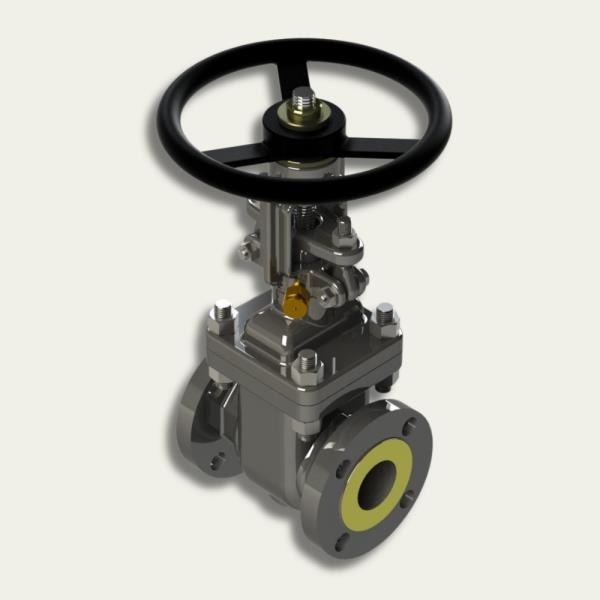
Gate valves are commonly used when full flow or complete isolation is required. Instead of regulating flow through a partially open position, a gate valve is generally designed to operate in either a fully open or fully closed position.
This makes gate valves suitable for applications where maintaining a low pressure drop through the pipeline is important. They are frequently used in transmission pipelines, oil and gas processing facilities, storage systems, and other applications where reliable isolation is required.
Gate valves are available in different configurations and materials to accommodate various pressure, temperature, and fluid conditions. When used correctly, they can provide robust isolation and long service life.
However, gate valves are generally not the first choice for continuous throttling because partially opening the valve can result in undesirable flow characteristics and increased wear.
3. Globe Valves
Globe valves are designed primarily for flow regulation and throttling. Their internal configuration allows operators to adjust the flow rate with greater precision than many isolation valve designs.
In oil and gas facilities, globe valves may be used in process control systems, pressure regulation applications, bypass systems, and other services where accurate flow adjustment is required.
Because throttling can generate pressure losses, globe valves need to be selected according to the specific process conditions. Correct sizing is particularly important because an incorrectly sized valve can negatively affect control accuracy, energy efficiency, and equipment performance.
For automated applications, globe valves can also be integrated with suitable actuation and control systems.
4. Check Valves
Check valves are designed to allow fluid to flow in one direction while preventing reverse flow. They are particularly important in oil and gas systems because unwanted backflow can damage pumps, compressors, pipelines, and other equipment.
Depending on the application, different check valve designs can be used, including swing, piston, lift, and other specialised configurations.
Check valves can be installed in pipeline systems, pump discharge lines, compressor systems, process units, and other locations where reverse flow must be controlled.
Selecting the correct check valve requires consideration of flow velocity, pressure, temperature, fluid properties, installation position, and potential pressure surge.
5. Butterfly Valves
Butterfly valves use a rotating disc to control flow and are often selected when compact construction, lower weight, and efficient operation are important.
They can be used in a variety of oil and gas applications, particularly in larger diameter piping systems. Depending on the design, butterfly valves can provide effective isolation and flow control while requiring less space than some larger valve types.
The selection of seat material, body material, pressure class, actuator, and disc design is important when using butterfly valves in demanding environments.
For automated systems, pneumatic or electric actuation can be added to enable remote operation and integration with plant control systems.
6. DBB Valves
DBB valves, or Double Block and Bleed valves, are particularly important in applications where positive isolation is required. A DBB arrangement provides two independent sealing barriers with a bleed or vent point between them.
This configuration can help operators verify isolation and safely release trapped pressure from the cavity between the barriers. DBB valves can therefore be valuable in applications involving maintenance, equipment isolation, hazardous fluids, and critical process systems.
They are commonly considered for pipeline systems, terminals, storage facilities, refinery applications, metering systems, and other areas where enhanced isolation is required.
Flowlink provides DBB valves and SBB DBB solutions as part of its oil and gas valve portfolio.
7. API Valves
The term API valves generally refers to valves designed, manufactured, tested, or certified according to applicable American Petroleum Institute standards.
API standards are widely referenced throughout the oil and gas sector because they establish technical requirements for equipment used in demanding petroleum and natural gas applications.
For example, API 6D is associated with pipeline and pipeline valve requirements, while other API standards apply to different valve types and services.
Using appropriately specified API valves can help project teams meet technical requirements and provide greater confidence regarding valve design, testing, materials, and performance.
It is important to note that compliance requirements depend on the specific valve, service, project specification, and applicable standard. Engineers should always verify the required standards before purchasing or installing valves.
8. Pipeline Valves
Pipeline valves are essential for transporting crude oil, refined products, natural gas, and other fluids over long distances. These valves allow operators to isolate pipeline sections, control flow, manage maintenance activities, and support emergency shutdown procedures.
Ball valves and gate valves are frequently considered for pipeline isolation because they can provide reliable shutoff and are available in designs suitable for high-pressure services.
Pipeline valve selection should take into account pipeline diameter, operating pressure, temperature, fluid characteristics, corrosion conditions, installation environment, actuator requirements, and applicable standards.
Flowlink’s oil and gas solutions include valve and actuation systems for pipeline management and emergency shutdown applications.
9. Upstream Valves
Upstream valves are used in exploration, drilling, production, wellhead, and gathering applications. These environments can involve high pressure, variable temperatures, corrosive fluids, hydrocarbons, sand, and other challenging conditions.
Valve reliability is particularly important in upstream operations because equipment may be located in remote or difficult-to-access areas. Maintenance and replacement can therefore be expensive and time-consuming.
Common upstream valve applications include wellheads, flowlines, gathering systems, separators, production facilities, and associated process equipment.
Valve materials and sealing systems should be carefully selected according to the characteristics of the produced fluids and the expected operating conditions.
10. Downstream and Refinery Valves
Downstream valves are used in refineries, petrochemical plants, gas processing facilities, storage terminals, and other processing environments.
Refinery applications can involve high temperatures, corrosive chemicals, hydrocarbons, steam, and complex process conditions. As a result, refinery valves need to be selected with careful consideration of temperature resistance, pressure rating, materials, sealing technology, emissions, and process compatibility.
Typical refinery applications include distillation units, cracking units, reforming units, hydrotreating units, blending systems, storage tanks, compressor skids, and pipelines.
Flowlink’s refining and LNG solutions are designed for demanding applications including distillation columns, cracking units, reforming units, hydrotreating units, blending tanks, LNG terminals, compressor skids, and pipelines.
How to Choose the Right Industrial Valve for Oil & Gas
Choosing the correct valve requires more than simply selecting a valve based on pipe size. Engineers and procurement teams should assess the complete operating environment before finalising a valve specification.
Operating Pressure
The valve must be capable of safely handling the maximum expected operating and design pressure. High-pressure systems may require specialised valve designs such as trunnion-mounted ball valves or other high-pressure configurations.
Operating Temperature
Temperature affects body materials, seals, seats, lubrication, and overall valve performance. High temperature and cryogenic services require specially designed valves.
Fluid Characteristics
The type of fluid being handled is another major consideration. Crude oil, natural gas, refined products, chemicals, sour gas, and other fluids may require different materials and sealing arrangements.
Flow Requirements
The valve must be correctly sized according to the required flow rate and system conditions. Oversized or undersized valves can negatively affect process performance and control.
Isolation Requirements
If positive isolation is critical, engineers may consider ball valves, gate valves, or DBB configurations depending on the application.
Automation Requirements
Many modern oil and gas facilities require remote or automated valve operation. Pneumatic, electric, hydraulic, or other actuation systems can be selected according to the application and control philosophy.
Flowlink also provides control valve and actuation solutions for plant and flow control applications.
The Role of Quality and Technical Support
Valve quality is only one part of successful valve selection. Technical support, product availability, documentation, sourcing, and application knowledge are equally important.
A reliable valve supplier should be able to understand the operating environment and recommend products according to project specifications rather than simply supplying a standard valve.
Flowlink Valves & Controls provides valve, actuation, control, and engineered flow solutions for oil and gas and other industrial sectors. The company operates across Australia, New Zealand, PNG, and Pacific regions and maintains an extensive network of global suppliers and partners.
The company’s product portfolio includes ball valves, gate valves, globe valves, check valves, DBB valves, control valves, cryogenic valves, butterfly valves, pressure regulating valves, pressure safety valves, actuation and instrumentation, strainers, and oilfield equipment.
Why Choose Flowlink Valves & Controls?
For companies looking for dependable industrial valves for oil and gas, working with an experienced flow solutions provider can simplify product selection and sourcing.
Flowlink Valves & Controls is an Australian-owned flow solutions company established in 2013, with operations in Australia and India. The company provides integrated flow equipment solutions for oil and gas, mining, petrochemical, power generation, water, food and beverage, and infrastructure applications.
Its oil and gas portfolio is designed to support upstream, midstream, and downstream operations, including wellhead control, pipeline management, emergency shutdown systems, refining, petrochemical processing, and gas processing applications.
For more information about available products and technical solutions, explore the company’s industrial valve products or contact Flowlink’s technical team for application-specific guidance.
Conclusion
Industrial valves are fundamental to safe and efficient oil and gas operations. From ball valves and gate valves to globe valves, check valves, butterfly valves, DBB valves, and specialised API valves, every valve must be selected according to the specific operating conditions and application requirements.
Pipeline valves help maintain control and isolation across transportation networks, while upstream valves support demanding production environments. Downstream valves and refinery valves provide reliable flow control in complex processing facilities where temperature, pressure, corrosion, and hazardous substances can create significant challenges.
Choosing the right industrial valves for oil and gas can improve operational reliability, support safety objectives, minimise downtime, and protect critical equipment. By combining suitable valve technology with experienced engineering and technical support, oil and gas operators can create more dependable flow control systems.
Flowlink Valves & Controls supports oil and gas operators with a comprehensive range of valves, actuation, controls, and engineered flow solutions. Speak with Flowlink Valves & Controls to discuss your valve requirements and identify a suitable solution for your application.
Frequently Asked Questions
1. What are the most commonly used industrial valves for oil and gas?
The most commonly used valves include ball valves, gate valves, globe valves, check valves, butterfly valves, and DBB valves. The appropriate valve depends on the application, pressure, temperature, fluid characteristics, flow requirements, and isolation needs.
2. What are API valves used for in the oil and gas industry?
API valves are valves designed or manufactured according to applicable American Petroleum Institute standards. They are commonly used in demanding oil and gas applications where specific technical, design, testing, and performance requirements need to be met.
3. Why are DBB valves important in oil and gas applications?
DBB valves provide two independent isolation barriers with a bleed point between them. This arrangement can help improve isolation and allow trapped pressure to be safely released or monitored, making DBB configurations useful for critical applications such as pipelines, terminals, refineries, and process systems.
4. What is the difference between upstream and downstream valves?
Upstream valves are typically used in exploration, drilling, wellhead, production, and gathering applications, where high pressure and challenging fluid conditions are common. Downstream valves are used in refineries, petrochemical plants, gas processing facilities, storage terminals, and other processing applications where temperature, corrosion, and process control requirements can be significant.
5. How do I select the right industrial valve for an oil and gas application?
Start by evaluating operating pressure, temperature, fluid type, flow rate, pipe size, material compatibility, isolation requirements, emissions requirements, actuator requirements, and applicable industry standards. Working with an experienced valve supplier can also help ensure the selected valve matches the project’s technical and operational requirements.